At Kron Gracie gym! Na academia do Kron Gracie!

 At Kron Gracie gym! Na academia do Kron Gracie!


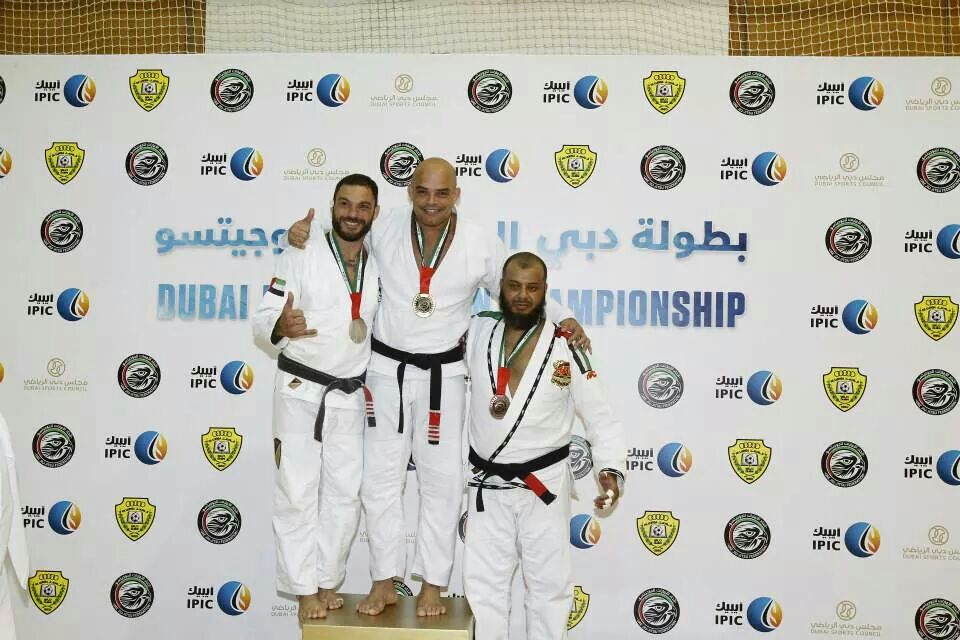
 The Saudi Arabia player Mohammed Al Ajmi(Gracie Barra KSA), came to Abu Dhabi Cup 2012 and did a great job. He won the tournament in both division gi and no gi. Mohammed on the picture between Sid Jacintho(left) and Maico Reiter(right).
 From left to the right(stand): Roger Oliveira, Nilson Lopes, Pedro Damasceno, Sid Jacintho(Head of Rules and Referees), Leonardo Rosanelli, Adilson Lima "Bita" and Orley "Tartaruga".
A Review of the Application of Simulated Altitude (Hypoxic) Training to a Range of Athletic Adaptation
by Kathryn Archbold1 and Kenneth Graham1. 1NSW Institute of Sport.
Background
There has been an increasing focus on the impact of altitude on athletic performance since the 1968 Olympics in Mexico City and the concomitant rise of athletes from geographic locations where living at in rarefied air seemed to confer a performance advantage.
Since then a number of options have been trialled by coaches and scientists to gain the reported benefits of altitude on athletic performance. These include relocating athletes to venues located in more mountainous regions and, living in the mountains and training at lower altitude.
More recently scientists have sought to bring the mountain to the athlete by the use of “altitude houses” and hypoxic tents, where air with a reduced oxygen concentration is used to simulate to rarefied air experienced by living in the mountains.
While this approach has been shown to be effective in contributing to performance improvements in endurance events there are a number of logistical limitations to this approach (such as living in the hypoxic environment for 16 hours per day) and the expense in providing facilities.
More recently, there has been evidence, in the research literature, for the benefits of training in simulated altitude across a wider range of sports activities including sprint, power and repeated sprint sports. This approach is less disruptive to normal life patterns, can accommodate a greater number of athletes accessing the facilities and, may actually result in better competition performance due to the combination of a greater training stimulus and a higher quality of recovery-adaptation in a sea-level environment. (Figure 1).
There is also evidence that the use of lower oxygen gas mixtures may provide the muscle with a metabolic stimulus without the need to exercise at higher intensities and mechanical loads. This can be an important part of the performance rehabilitation and training progression of athletes returning from illness or injury.Endurance performance
Maximum Oxygen Consumption (VO2max) and Lactate Threshold
Increases in VO2max (l.min-1 and ml.kg.min-1), lactate threshold, simulated 30km time trial (TT) performance and mean power for the TT were reported in trained male cyclists in response to three weeks of hypoxic training (Czuba et al 2011). Two groups of 10 male cyclists (VO2max = 67.7 and 67.8 ml.kg.min-1) were recruited for the study. Both groups undertook the same training programme with the addition of 15.2% inspired oxygen concentration (approximately 2600m simulated altitude) to three 1-hour sessions each week for the treatment group while the control group undertook the same training at 21% inspired oxygen concentration. Arterial saturation, as measured by pulse oximetry, was in the 80-85% range during the hypoxic sessions and 94-95% in the group doing the same session in normoxia.
Rodriguez (1999) compared an exercising vs non-exercising group over 9days at simulated altitude (4000m-5500m) for 3-5hrs/day. Significant increases were seen in maximal exercise time and maximal pulmonary ventilation possibly as a result of improved haematological values and well as an increase in the lactate threshold.
Katayama (2003) and Roels (2005) also found an increase in VO2max following hypoxic exposure (resting exposure and intermittent hypoxic interval training (IHIT) respectively) despite no change in haematological parameters.
Enhanced Mitochondrial function
After a 6 week training program, mitochondrial function was increased (through qualitative but not quantitative changes) as shown by an increase in Km for ADP. This represents a shift in mitochondrial respiration to a more oxidative state allowing better coupling between energy demand and supply resulting in an increase in time to exhaustion and VO2max. The results occurred with only 12-20mins of hypoxic exposure (14.5% O2) at VT2, twice a week (Ponsot 2006).
Katayama (2004) and Serebrovskaya (2002) both found a downward trend in the oxygen cost during submaximal power outputs. They suggest this may be a result of an alteration in mitochondrial respiration, allowing it to be more economical and efficient in oxygen transport. Ie. This change may increase the amount of ATP produced per mole of oxygen consumed, thereby resulting in less oxygen required for the same amount of energy produced. Worth noting is that Katayama’s results occurred without the use of hypoxic training, instead using resting hypoxic exposure of 3hrs/day for 12days at 12.3% O2.
Haematological parameters
Rodriguez (1999) compared an exercising vs non-exercising group over 9days at simulated altitude (4000m-5500m) for 3-5hrs/day. Significant increases were found in Hct, RBC count, reticulocyte count and Hb concentration (all associated with increased blood oxygen transport), yet there was no difference between groups- indicating that hypoxia alone was responsible for the changes. The authors concluded that very short term intermittent exposure to moderate hypoxia activates the erythropoietic response and improves endurance capacity in healthy subjects.
An increase in EPO has also been found following 5.5hrs exposure to hypoxia (3000-400m) in a rested state (Eckhardt 1989). It has been suggested that the duration of hypoxic exposure is the most important factor when considering the effects of erythropoietin release (Hamlin 2010).
HIF-1
Hypoxia inducible factor (HIF-1) is a specific oxygen-sensing transcription factor that plays pivotal role for the functional adaptations to hypoxic training. If there is a significant drop in cellular pO2 (eg. in hypoxic conditions), the signalling protein responsible for oxygen level monitoring hypoxia- inducible factor 1 alpha (HIF-1a) triggers the transcription of a large number of genes to counteract the effects of this reduced oxygen supply to cells. These include improved oxygen transport capacity in the blood due to an erythropoietin-induced increase of the haematocrit, induction of neovascularization by an enhanced expression of the VEGF, more efficient utilization of oxygen due to an increase in glucose oxidation induced by activation of glycolytic enzymes, and possibly also a reduction of negative effects on tissue growth and body weight during chronic exposure to hypoxia. From these studies, it can be inferred that activation of HIF-1 might lead to adaptations, which improve oxygen transport, substrate oxidation, and probably tissue growth, adaptations that are also known to influence exercise performance capacity in humans.
Vogt (2001) studied 4 groups of subjects who trained 5 days a week for 6 weeks. Subjects were divided into hypoxia (3580m) and normoxia as well as high (Blood lactate=4-6mM) and low intensity (2-3mM) training in each of these conditions. The level of HIF-1a mRNA increased after training under hypoxic conditions, irrespective of the level of training intensity. Myoglobin and VEGF (vascular endothelial growth factor) were also increased but only after the high intensity hypoxia protocol. Vogt concluded that high-intensity training in hypoxia elicits molecular and structural adaptations favoring oxygen transport and utilization in human skeletal muscle under oxygen- restricted conditions and may result in enhanced exercise performance at altitude. Dufour (2006) has
expressed the importance of sufficient hypoxic exercise intensity and duration within intermittent hypoxic training (IHT) programs in order to reduce oxygen pressure in the active muscle and achieve a substantial HIF-1 in order to obtain significant performance improvemetns in already trained athletes.
Buffering Capacity
An increase in heat shock protein (HSP), one of the hydrogen ion buffering proteins, has been reported in response to exposure to hypoxia (Taylor et al. 2010). Increases in the concentration of this protein and other proteins can contribute to an improved tolerance to the anaerobic component of intense exercise.
Taylor et al (2011) conducted a study which sought to use a hypoxic stimulus to elicit increases in HSP72 and HSP32 in an attempt to confer protection to the oxidative rigours of sub-maximal aerobic exercise. Eight healthy recreationally active male subjects performed 60 min cycling on a cycle ergometer prior to (EXB1) and following (EXB2) five consecutive days of once daily hypoxia (2980 m, 75 min). Significant increases were found in HSP72, HSP32, oxidised glutathione and TBARS in response to the 5 day hypoxic intervention. Exercise induced significant increases in HSP72 and HSP32 post exercise in EXB1, this response was absent for post EXB2. Conclusion: The hypoxia mediated increased bio-available HSP32 and HSP72 prior to exercise commencing in EXB2 compared to EXB1. Furthermore, the favourable alterations in glutathione redox, before commencement of EXB2 compared to EXB1, may also contribute to this reduction in the oxidative cost of this sub- maximal aerobic exercise.
Other measures
In a study by Terrados (1990) 10 healthy subjects trained one leg under normobaric conditions and the other under hypobaric conditions (equiv to 2300m). Each leg was trained for 30mins at 65% maximal work capacity over 3-4sessions a week for 4 weeks. Muscle biopsies showed a greater increase in CS (Citrate Synthase) activity and myoglobin following hypobaric training. Lori (1997) conducted a similar unilateral leg training study for 8weeks at 13.5%O2, with her results confirming that training under a moderate hypobaric hypoxic condition increases CS activity to a greater extent than normoxic training. Despite a differing protocol, Vogt also found elevated CS levels following Hypoxic training. CS is a marker of oxidative capacity.
Hypoxia is also known to stimulate ADH release resulting in an increase in plasma osmolality which can contribute to increasing Plasma Cell Volume and Haemoglobin (Rodriguez 1999).
Resistance training.
Resistance training during acute exposure to hypoxia before returning to normal air conditions has shown to provide a positive impact on the training and adaptive response Nishimura et al (2010). The response to this model is in contrast to earlier work on living and training in hypoxia where, a reduced adaptive response occurred in the hypoxic condition when compared to normoxia (Narici and Kayser, 1995). The primary difference between these studies is that in one study (Narici and Kayser, 1995) one group lived at altitude (hypoxia) which may impact on the recovery/adaptive processes and mask any direct benefits gained from training in hypoxia.
Kon et al (2010) showed that resistance training in hypoxia (13% O2) caused greater increases in lactate (an indication of exercise intensity), epinephrine, norepinephrine and growth hormone. Both the intensity of the exercise and GH are highly correlated with the level of hypertrophy and strength gains. This study demonstrated that resistance exercise under hypoxia induces a greater anabolic hormone response than that under normoxia. A follow up study was conducted by Kon (2011) in order to determine the effects of resistance exercise training under systemic hypoxia on hormonal responses and muscular adaptations. Following 8weeks of resistance training in normoxia or hypoxia (14.4 %), muscle CSA of the femoral region and 1RM in bench and leg press were increased. However there was no significant difference between groups. Following hypoxic resistance training (but not normoxia) there was an increase in exercise volume, testosterone/cortisol ratio and plasma vascular endothelial growth factor (VEGF). These findings suggest that resistance exercise training under systemic hypoxia caused greater hormonal responses and greater increases in muscular endurance than that under normoxic conditions.
Body Composition
Haufe (2008) showed a reduction in triglyceride (representing greater lipid oxidation) and body fat levels following 3/wk x60mins x 4weeks at 15%O2 at a moderate intensity despite exercising at a lower workload (but same cardiovascular intensity) than the normoxic group. Body mass was also found to decrease following the first 5 weeks of hypoxic exposure (2hrsx 3/wk resting exposure at 15- 11% O2) in a study by Burtscher (2010).
Increased resting energy expenditure has also been observed following supplementation with recombinant human erythropoietin (Christensen 2011). EPO is a hormone that increases Hb mass and RBC volume by stimulating the oxygen binding capacity of the blood. It is produced in the kidneys as a result of low oxygen tension. Christensen treated 10 healthy young men with 400 IU/kg rHuEpo. Resting energy expenditure increased and fat oxidation tended to be higher after treatment. This is in
agreement to previous studies who have supplemented mice with EPO. As stimulated altitude training provides a hypoxic stimulus to the body, these results provide an explanatory mechanism of how hypoxic training may aid weight loss.
Sprint performance
Meeuwsen (2001) and Hendrickson (2003) conducted two studies with the same design and found that 10 consecutive days of 2hrs cycling at 60-70% HRR (heart rate reserve) at 2500m (simulated) provided an additional effect on the anaerobic system (than training without hypoxia) as a result of an enhanced stimulus for adaptation. These studies showed that even low intensity training during intermittent exposure to hypoxia can improve both aerobic and anaerobic systems. Hypoxic training resulted in an increase in maximal power output, anaerobic mean power and aerobic peak power. While there was no statistical significance between the two different training regimes in improvement of Wmax (mean maximal power output per kilogram of body weight), the difference between groups was quite substantial given that the training period was only 10days. In addition, Meeuwsen found a significant increase in VO2max following hypoxic training only whereas Hendrickson did not.
Hamlin (2010) who conducted a study with a similar design to both Meeuwsen and Hendrickson, found that 10 consecutive days of IHT substantially enhanced anaerobic power during a 30s Wingate cycle test. Hamlin’s subjects only completed 90mins (vs 2hrs) of training at 60-70% HRR but had the addition of 2x30s all out sprints at the end of each session as well as decreasing oxygen concentration over the 10days to allow for adaptation (simulated equivalent of 3200m-4400m). 30s Wingate test performance improved by 3% and mean 30s power increased.
Tapering and recovery exercise
Due to the increased metabolic effect of hypoxia on the body, athletes can exercise at a lower intensity/workload for a given cardiovascular stimulus (Haufe, 2008). Eg. Exercising at 150bpm in normoxia may require an effort of 250W vs 200W in hypoxia, thus resulting in a smaller mechanical loading on the body. This may help reduce injuries and/or allow greater recovery of muscles without any loss in VO2max or other cardiorespiratory variables.
In conclusion:
Intermittent, periodic or episodic hypoxia might have the ability to be able to preserve the training intensities close to those of competition, and improve performance more so than continuous hypoxia (Roels 2005). Although some studies may show only small or statistically insignificant changes
training induced improvements, these changes can result in a significant increase in athletic performance. Taken together, these results suggest that, in already trained athletes with high muscular capacities, qualitative rather than quantitative adaptations of skeletal muscle metabolism are still to be obtained after an IHT. These qualitative adaptations could participate in the increase of the performance by improving integration of energy demand to utilization (Ponsot 2006).
References
Burtscher, M., H, Gatterer et al (2010). “Effects of intermittent hypoxia on running economy.” Int J Sports Med 31(9); 644-650
Christensen, B., M.K. Vendelbo et al. (2012). “Erythropoietin administration acutely stimulates resting energy expenditure in healthy young men”. J Appl Physiol IN PRESS
Czuba, M. et al (2011). “The effects of intermittent hypoxic training on aerobic capacity and endurance performance in cyclists” J Sports Sci Med. 10, 175-183
Dufour, S.P., E. Ponsot (2006). “Exercise training in normobaric hypoxia in endurance runners. I. Improvement in aerobic performance capacity.” J Appl Physiol 100;1238-1248
Eckhardt, K., U. Boutellier et al (1989). “Rate of erythropoietin formation in humans in response to acute hypobaric hypoxia”. J Appl Physiol 66 (4) 1785-1788.
Hamlin, M. J, H.C. Marshall et al (2010). “Effect of intermittent hypoxic training on 20km time trial and 30s anaerobic performance”. Scandinavian journal of medicine & science in sports 20; 651-661
Haufe, S., S. Wiesner et al (2008). “Influences of normobaric hypoxia training on metabolic risk markers in human subjects.” Med. Sci. Sports Exerc 40(11);1939-1944
Hendriksen, I.J.M, T Meeuwsen (2003). “The effect of intermittent training in hypobaric hypoxia on sea level exercise: a cross-over study in humans.” Eur J Appl Physiol 88:396-403
Katayama, K., H. Matsuo et al (2003). “Intermittent hypoxia improves endurance performance and submaxiaml exercise efficiency.” High Altitude medicine & biology 4 (3):291-306
Katayama, K., K. Sato et al (2004). “Effect of intermittent hypoxia on oxygen uptake during submaximal exercise in endurance athletes” Eur J of Appl Physiol 92 (1-2) 75-83
Kon, M., T, Ikeda et al (2010). “ Effects of acute hypoxia on metabolic and hormonal responses to resistance exercise.” Med. Sci. Sports Exerc 42(7);1279-1285
Kon, M., T, Matsubayashi et al (2011). “Effects of resistance training under systemic hypoxia on hormonal response and muscular adaptations”. Med. Sci. Sports Exerc 43(5) Suppl 1; 842
Lori, M., J. MacDougall et al (1997). “Skeletal muscle adaptations to training under normobaric hypoxic versus normoxic conditions”. Med. Sci. Sports Exerc 29(2); 238-243
Meeuwsen, T., I.J.M Hendriksen et al (2001). “Training-induced increases in sea level performance are enhanced by acute intermittent hypobaric hypoxia”. Eur J Appl Physiol 84:283-290
Narici, M. V. and B. Kayser (1995). "Hypertrophic response of human skeletal muscle to strength training in hypoxia and normoxia." Eur J Appl Physiol Occup Physiol 70(3): 213-9.
Nishimura, A., M. Sugita, et al (2010). "Hypoxia increases muscle hypertrophy induced by resistance training." Int J Sports Physiol Perform 5(4): 497-508.
Ponsot, E., S.P. Dufour et al (2006). “Exercise training in normobaric hypoxia in endurance runners. II. Improvement of mitochondrial properties in skeletal muscle. J Appl Phyisol 100; 1249-1257
Serebrovskaya, T.V. (2002). “Intermittent hypoxia research in the former Soviet Union and the Commonwealth of Independent States (CIS): history and review of the concept and selected applications. High Alt. Med. Bio. 3:205-221
Rodriguez, F.A, H.Casas et al (1999). “Intermittent hypobaric hypoxia stimulates erythropoiesis and improves aerobic capacity.” Med. Sci. Sports Exerc 31(2);264-268
Roels, B. G.P Millet et al (2005). “Effects of hypoxic interval training on cycling performance.” Med. Sci. Sports Exerc., 37(1); 138-146.
Roels, B., D.J. Bentley (2007). “Effects of intermittent hypoxic training on cycling performance in well trained athletes”. Eur J Appl Physiol 101;359-368
Taylor, L., A. W. Midgley, et al.(2010) "The effect of acute hypoxia on heat shock protein 72 expression and oxidative stress in vivo." Eur J Appl Physiol 109(5): 849-55.
Taylor, L., A. Midgley, et al (2011). “Hypoxia mediated prior induction of Hsp72 and Hsp32 provides protection to sub maximal exercise.” Med. Sci. Sports Exerc 43 (5) Suppl. 1; 153
Terrados, N., E. Jansson et al (1990). “Is hypoxia a stimulus for synthesis of oxidative enzymes and myoglobin.” J. Appl. Physiol. 68 (6); 2369-2372
Vogt, M., A. Puntschardt et al (2001). “Molecular adaptations in human skeletal muscle to endurance training under simulated hypoxic conditions”. J Appl Physiol 91:173-182
 The Altitude Technology Solutions is the number one company in the world with altitude solutions.


Aos interessados, lembro que as entrevistas acontecerão no hotel Arena Copacabana, na Av. Atlântica, 2064. de 8am às 5am tanto neste sábado quanto no domingo (25 e 26 de fevereiro). Os pré-requisitos são: ser faixa-preta de Jiu-Jitsu, e ter conhecimento de inglês e informática. As vagas são tanto para homens quanto mulheres, e ser um casal facilita ainda mais a seleção.
Boa sorte e espero ve-los em breve!


Training in Martial Arts brings all kinds of personalities into the gym. Brazilian Jiu-Jitsu is no exception. When pairing up with a partner for drilling or rolling, you will likely have conversations. The majority of the time, you will hear normal discussions of training, lives and experiences.
Occasionally, though, you will hear things you wish you hadn’t heard.
10. “I’ve been training UFC..”
As televised fighting becomes more and more main stream, more people are finding Brazilian Jiu-Jitsu. Some of them are only stopping by your BJJ class to sharpen up their backyard UFC training skills. These are often people who value spazzy super fast movements, flailing flopping attacks, and complaining whenever a technical ground match starts to develop in a MMA event.
9. “You wash your gi after EVERY class?!?!”
Yes, and from the smell of you, sir or madam, you do not. Nothing gives me the heebie jeebies like hearing that a gi has not been washed after training. Yes, I said heebie jeebies, that’s how real things just got. Do you have any idea what’s crawling in that unwashed gi? This literally make me shudder.
8. “You smell really nice.”
There is never a time when it is appropriate for one training partner to tell another training partner he or she smells really nice. Especially not in a creepy hushed whisper.
7. “No leg locks, ok?”
I don’t get why some folks think it’s ok to say this. I tell you what, I won’t do leglocks, if you won’t do any guard passes. If you are excluding an entire branch of submissions, what’s next? Forcing your partner to work off his or her back?
6. “Can you work off your back only?”
Oh wait. Yeah, this happens too. I’m a big guy, I’m over 6’4″ and I definitely out weigh you. Sure, I’ll ONLY work off my back. That’s totally cool. No, you know I understand I’m a big guy and it’s not fair for me to use my top game…ever. Sheesh. You know the real kicker here? The few females I train with have never ever said this to me.
5. “Wow, you’re really strong! How much do you weigh?”
This is one of the most deflating things to hear your training partner say. Especially, after really working for a technical submission that you just so happen to be working on religiously over the last month. When you are of the larger size, you expect to hear this. When it gets funny is when I hear people say it to instructors or upper belts..who are usually 100lbs+ lighter than myself.
4. “Watch out for my Knee/Shoulder/Ankle/Knee. It’s injured.”
This one is tricky because yes, if you have a tender joint or slight injury, you definitely should tell your training partner. This is to avoid them cranking a submission on it. However, if you are so injured that the affected area needs to be avoided altogether, you’re better off just skipping the rolls.
3. “Let’s roll light” *Proceeds to go balls to the wall intense.
There is nothing wrong with asking your training partner to go light. Listen though, if you say that and immediately switch on the Hulk power level jiu-jitsu, you have failed on levels I can’t even describe. If you say “let’s go light”, then roll light and easy, ok?
2. “Does this look like MRSA/Ringworm to you?”
I.am.not.a.doctor.
You.do.not.belong.on.the.mats.
Carry.yourself.to.a.physician.immediately.
Do.not.come.back.without.a.doctor’s.note.
Seriously.
1. “I’ve got this rash that just won’t stop itching.”
See above. The only rashes I want to talk about are fancy new rash guards. If you have a rash, I don’t want to know how you got it, where it is on your body, or that you have a slightly cheese smelling discharge. Please, do us both a favor go see a doctor. Now. And do every training partner everywhere a favor by staying off the mats until you have the ok from your doctor.

Rigan Machado is a red & black belt in Brazilian Jiu Jitsu, having been the very first black belt graded by Carlos Gracie Junior. Rigan is the nephew of Gracie Jiu Jitsu founder, Carlos Gracie(Senior), having been amongst the toughest BJJ competitors of the 1980’s. Machado moved to the USA in the late 1980’s where he established his own successful grappling franchise, producing high profile fighters such as Rico Rodriguez and coaching famous personalities like Dan Ionosanto and Chuck Norris. Rigan Machado is also a successful author, having published one of the most successful books in Jiu Jitsu, theEncyclopedia of BJJ.
Lineage: Mitsuyo Maeda > Carlos Gracie Sr. > Carlos Gracie Junior > Rigan Machado
Main Achievements:
Favourite Position: n/a
Weight Division: Peso Pesadíssimo (over 100kg/221lbs)
Team/Association: Machado Jiu Jitsu
Merchandise: Encyclopedia of BJJ (book)
Rigan Machado was born on the 2nd of July, 1966 in Rio de Janeiro, Brazil. He had Carlos Gracie as an uncle (Carlos was married to the sister of Rigan’s mother) and so Rigan grew up being very close to the Jiu Jitsu environment, rolling with his cousins from an early age.
When Rigan reached his mid-teens (around 14 or 15 years old), he started taking Jiu Jitsu more seriously, becoming a fierce competitor. He started training with one of his older cousins, who was already a legend of the sport, Rolls Gracie, and stayed with Rolls until his tragic death in 1982. At the time, Carlos Gracie Junior was seen as Rolls Gracie’s second in command and Rigan as the 3rd, with the Master’s passing, Rigan took the spot as assistant instructor while Carlinhos took control of the class, shortly after Rigan Machado became the first ever Carlos Gracie Junior black belt.
In the late 1980’s Rigan Machado came to San Francisco where he spent some time with his cousin Cesar Gracie. He stayed in the Bay Area for a while, but there was very little Jiu Jitsu there and so he moved to Los Angeles. In L.A. he started coaching at Rorion Gracie’s academy, Royce Gracie was incredibly busy teaching private lessons and with the enthusiastic growth of the place, Rorion needed someone to coach the group classes. Rigan Machado spent a year at the Gracie academy but he left because of diverging ideas on how classes should be structured. As Rigan left, he had plans to call his own academy Gracie Jiu Jitsu, this was not possible as Rorion Gracie had the legal rights to the Gracie Jiu Jitsu name in the United States of America.
As Rigan did not have the rights to give his master’s name to his school, he chose to call it Machado Jiu Jitsu with the approval of Carlinhos Gracie. In the early days, Rigan was fortunate to have the help of Hollywood actor Chuck Norris, who helped him get established and brought a lot of attention to the gym. With the rapid growth of the academy, Rigan felt the need to bring his own brothers to the US to help him with the business.
As there was no BJJ competitions in the US worthy of a fighter of Rigan’s calibre, Machado decided to start competing in different tournaments where he could keep sharp and have fun. He entered several Sambo (Sombo) and Judo competitions winning several of those, including 3 Pan American championships and 4 national US championships in Sambo, but as both Sambo and Judo had very restricting rules on the ground, Rigan ended leaving his competitive career on the side to dedicate himself fully to coaching Jiu Jitsu.
Rigan Machado at Judo Tournament
Rigan at Sambo Tournament
Rigan Machado vs Rickson Gracie
To maintain your energy level at a Brazilian Jiu-Jitsu competition you need to eat. But eating too much, or the wrong things, or at the wrong times is much worse than not eating enough.

Extra food beyond that required for the match isn't going to help your performance. And if you eat too close to the match, your body might have to divert energy to your digestive system that could have been used in the fight. It takes about 4-5 hours to digest a normal meal with lots of protein and fats, and a small meal of carbohydrates can be digested in 2-3 hours. You really don't want any food left in the stomach during your fight so plan accordingly.
Here are some quick tips for eating before and during a competition:
Above all, don’t stress too much about your food, just eat really well the day before and make sure not eat too close to the time you are going to fight. If you gas during a fight it is far more likely to be from dehydration, conditioning, or nerves than from a lack of fuel to your muscles.
Grip strength is incredibly important for BJJ, especially when training with the gi. A traditional gripper may help with finger grip strength but it won’t help with wrist strength or thumb strength which can both make a difference when trying to hold on to a wriggling opponent. These exercises will help you develop finger, thumb, and wrist strength that is functional for BJJ.

Take 2 small weight plates and place them together with the smooth side facing out on each plate. Now put your thumb on the inside plate and your fingers on the outside plate. Pinch the plates together and lift the weight up, letting it hang from your side for 30 seconds. When you can do 6 reps, increase the weight slightly. If you ever get to 45lb plates make sure you are careful when shaking the hands of mere mortals.
Plate Curls
Sit down on a chair or bench and rest your forearm on your leg with your wrist just past your knee. Now take a single weight plate and hold it with your thumb on top and your finger on the bottom. Curl the weight up and rotate your thumb towards the outside of your body. Repeat for 6 sets of 8 curls.
Tennis Ball Hangs
Place a tennis ball in each hand and reach up and hang from a chin up bar. When you can hang for 6 reps of 30 seconds each, add in chin ups with the tennis balls in your hands.
Duffle Bag Grabs
Get a heavy duty duffle bag and load it with sand or cement mix. Squat down with your feet shoulder width apart and the duffle bag between your legs. Reach down, grip the bag and lift your hand straight up so your knuckles touch your chin. When you can do 6 sets of 8 with each hand add some more sand or cement to the duffle bag.
Gi Pull Ups
Take a gi jacket and run a piece of wood or steel cable from the opening of one sleeve through the jacket and out the opening of the other sleeve. Make sure that the wood or cable is strong enough to support your body weight. Hang the wood or cable from the ceiling again making sure to engineer a strong enough connection that your body weight will be supported. With your gi hanging from the ceiling you can grip both lapels and do pull ups. You can also try hanging from one hand, and moving your grip from the lapel to the sleeve while hanging.
Hammer Levers
Take a sledge hammer and hold it at the end of the handle. Extend your arm straight out so that the hammer handle is parallel with the ground. Now keep your arm straight and slowly lift the hammer head higher off the ground using your wrist. Do 8 reps and then switch grips so that your arm is at a 90 degree angle with your forearm parallels to the ground and the hammer hanging straight down. Using your wrist move the hammer head towards the back of your body for 8 reps. Repeat both exercises for a total of 6 sets.
Stabilization Training on the Stability Ball
BJJ offers unique body movements that strengthen the core musculature such as the external obliques, rectus abdominis, and psoas. However, beneath the surface, there are muscles that stabilize and strengthen the lumbo-pelvic-hip complex ( the real core). These muscles are the inner layer of muscles that attach directly to the spine including the transverse abdominus, multifidus and internal obliques. While most focus on training that strengthens outer muscles, it is the inner unit of muscles that provide core stabilization to distribute weight, absorb forces, and produce force. Below are 4 core stabilization exercises that synergistically balance, stabilize, and improve your game on the mat.
1. Butt on Ball
This is a great starting position for establishing stabilization through the midsection. Using a stability ball, position yourself on top while lifting your legs and arms. Your first objective is to stabilize and maintain balance. To add difficulty, transition slightly from cheek to cheek (not hip to hip) while maintaining complete control.
2. Back on Ball
Following the same objective as example one, try lifting your knees to your chest while balancing on the ball with your lower back. You can use your hands as needed. After you feel comfortable holding the position, try transitioning from your back to butt.
3. Belly on Ball
This position is similar to holding mount on a larger opponent. Balance yourself on the ball while only touching your hips and stomach without touching your arms or legs on the ground. Stabilize this position and find balance.
4. Knees on Ball
The final stabilization involves getting on the ball with both knees. You’ll want to use your hands when you first try this, but as you advance you can try it without them. After you master the stabilization phase, transition between knees and belly holding each position at least three seconds before transitioning.
These four exercises are proven to strengthen your inner musculature. Clearly, these positions will increase the timing and efficiency of core muscle recruitment and enhance your Brazilian Jiu Jitsu top game. I use these exercises with my students and have had great success. Try them and give me some feedback.
Below is an example workout (or warmup) you can add to your existing workouts. For added difficulty, I’ve added a transition drill which is designed to flow between positions without touching the ground. Enjoy!
- Wally Holem
Wally teaches BJJ at Carlson Gracie Jiu Jitsu Club in Mishawaka, Indiana. He is also a Strength and Conditioning Coach at Bethel College and holds a Masters Degree in Exercise Science. He can be contacted at: wallybjj@aol.com
 The truth is that muscle soreness, (the kind that sets in 24-48 hours after a hard workout) is really due to microscopic muscle tears. The microscopic tears that occur as a result of over exertion actually swell and bleed, and cause an increase in sensitivity.
 good instruction, study, and many many hours on the mat to slowly train your body and mind in how to properly respond to the dynamic and fluid game of Jiu-Jitsu. It's natural to want to take a measure of progress during this long journey. We all want to know, am I getting better? Am I ready for the next level?
 Walnuts

 Me and Lubomir give a certificate to Alvaro Mansor during the Rules Course from IBJJF in Abu Dhabi. Alvaro was our pleasure meet you here. See you soon. Was a amazing course, thanks to share your knowledge with us.
O brasileiro Fabrício "Morango" Simões voltou com o pé direito ao Ultimate e derrotou o estreante americano Tommy Hayden nesta sexta-feira, pelo card preliminar do UFC Fight Night 26, em Nashville, EUA. O peso-leve carioca finalizou o até então invicto Hayden com um mata-leão ainda no primeiro round.
Hayden começou melhor, acertando um golpe de encontro de direita. As entradas de Morango nas pernas estavam bem marcadas pelo americano, que quase conseguiu suas costas num clinch. Com cerca de três minutos restando no primeiro round, o carioca enfim conseguiu levar a luta ao chão e, trabalhando na guarda, quase encaixou uma chave de braço.
O americano tentou se levantar, mas Morango o pegou pelo tornozelo e levou a luta de volta para o chão, invertendo a posição e ficando por cima. Rapidamente, o brasileiro conseguiu pegar as costas e o estrangulou com um mata-leão. Hayden pareceu bater em algumas ocasiões, mas o árbitro Josh Rosenthal só encerrou o combate quando o americano bateu duas vezes no braço de Camões, aos 4m03s.
- Esta jaula é mágica. Quero agradecer ao Joe Silva e Dana White por me trazerem de volta. Esta é a minha primeira vitória no UFC. Prometi que estaria melhor nas próximas lutas e espero um dia lutar no Brasil - disse Morango no microfone aberto do evento, após a luta.
Morango agora tem 14 vitórias, seis derrotas e um empate na carreira. Ele havia empatado com Caol Uno e perdido parta Kurt Pellegrino em sua primeira passagem pelo Ultimate e venceu duas lutas no Tachi Palace Fights antes de voltar à franquia. A derrota foi a primeira da carreira de Hayden, que vinha de oito vitórias consecutivas.

Gene Pace, residente de Whittier, recebeu sua faixa-preta aos 78 anos, na última quinta-feira. Foto: Don Leach/Daily Pilot.
Reportagem da Graciemag.com !
Gene Pace, um simpático avô de 78 anos, treina Jiu-Jitsu há mais de 15 anos, na escola Gracie Barra Costa Mesa, na Califórnia.
Ao receber sua faixa-preta, na última quinta-feira, Gene virou artigo do jornal“Daily Pilot”, e a reportagem de Sarah Peters, com foto de Don Leach, deixou algumas lições.
Gene treinava na GB duas vezes por semana, o que parece o correto para evitar maiores lesões em praticantes de idade avançada.
A cerimônia de graduação reuniu cerca de cem amigos e fãs do novo velho faixa-preta.
“Foi um pouco emocionante”, admitiu Gene, com uma gargalhada.
Mike Buckels, professor da GB Costa Mesa, destacou a grande qualidade do faixa-preta sênior 5 (apenas porque não existe sênior 8 ou 9).
“Ele é o Sr. Consistência. Nunca perde uma aula, jamais”, disse Buckels, que tinha apenas um faixa-preta antes de Gene. “Ele executa exatamente o que é ensinado. Se você mostra uma posição para ele, ele vai buscar fazer aquele movimento perfeitamente”.
Buckels contou que é criterioso na hora de casar a dupla de Gene, mas reforça que ele não deve ser subestimado.
“Gene consegue treinar comigo – e eu peso mais de 80kg – e me derrubar. Ele treina normalmente com caras quase 55 anos mais novo que ele”, diz Mike, reforçando uma das peculiaridades do Jiu-Jitsu, arte suave em que a técnica compensa o gás e a força física.
Gene Pace começou a treinar artes marciais pelo exercício e para animar seus netinhos.
“Pensei comigo, eles não vão me matar, e de repente eu ainda aprendo alguma coisa nova. Uma vez que comecei, tive de pensar: vou desistir e envergonhar meus netos? Nada, não se pode ser desrespeitoso assim. E todo mundo continuou treinando”, relembra o vovô casca-grossa.
A atitude de Pace de “termine-o-que-você-começou” foi vital para chegar à faixa-preta.
E você, tem terminado o que começa? Pode estar faltando mais Jiu-Jitsu na sua forma de encarar as coisas.
Comente o que de principal você aprendeu com Gene Pace, e se você conhece algum caso parecido na sua escola de Jiu-Jitsu.